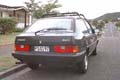
Hi, I have a 1988 340 with a B14.4E engine running 95 unleaded and am a bit foxed about the correct spark plugs and gaps to run them at and cannot find a website that talks about Volvo plugs. Can anyone help please.
The handbook says to use Volvo plugs 273588-4s with a 22-25 thou gap but, I do not have any of those.
I had a set of Volvo 307x9146775 plugs in it (preset triple electrodes at about 35 thou) which were running OK until we fixed a bad carb/intake gasket leak (after which the car started idling nicely when pulled up to a stop), but cold starting is not as easy as it was before with the choke on and the plugs (particularly 1 and 4) and the exhaust are quite noticeby sooty.
I also have a used set of Volvo 3344472-0s plugs (which came with it) and that have a much longer ceramic nose than usual, but I have no idea what their gap is supposed to be. I looked in the Haynes manual for the 340/360 and that gave a couple of champion types (N9YC and NYCC), but with two different gap settings (24 and 32 thou respectively).
Before fixing the carb gasket leak, it would cold start immediately with choke full out and no throttle; now its a case of pulling the choke right out, giving it half throttle, holding your mouth the right way and grinding it over four of five times and trying it catch it when it fires using the throttle and shoving the choke in and out to find the right place. It runs well and idles without the choke after about 3 k/1.5 m and is doing about 35mpg or 12.5L/100k (may have a faint low-speed miss).
I only use the car on fairly short runs at the moment (15k/10 m max, often 5k/3m) and the temperature never seems to get above about 1/4 on the guage unless stuck in traffic when it climbs up to about half and the fan only ever kicks in very occasionally, the temp drops back to the quarter mark when we get going again - maybe this has a effect ?
has anyone run across this before or have any ideas/suggestions on the plug types and gaps for this model ?
plug types/gap for a B14.4E
plug types/gap for a B14.4E
AQM
1988 two door 340 hatch. 245 000 km.
1988 two door 340 hatch. 245 000 km.

it sounds like you might simply be running rich - if the car was tuned well with the air leak, then once the leak is fixed there will be too much fuel coming in - sort that and i recon you will be ok. i use ngx spark plugs myself
btw.. a 340 in new zealand? thats news to me..
btw.. a 340 in new zealand? thats news to me..
Siddy-'87 360 Glt lhd convertible
Swapsea-'89 360GLT-swapped!
Leah-'84 340GL-sold! Maisie-'85 340GL-sold!
Snowy-'88 360GLE-killed by a truck! Dougle-'89 360GLT-dead&stolen!
Nessy-'86 340GL-foggy's! Grace-'86 360GLT-gone!
Swapsea-'89 360GLT-swapped!
Leah-'84 340GL-sold! Maisie-'85 340GL-sold!
Snowy-'88 360GLE-killed by a truck! Dougle-'89 360GLT-dead&stolen!
Nessy-'86 340GL-foggy's! Grace-'86 360GLT-gone!
Yep, sounds like your carby needs a tune up. If you've got the correct Volvo plugs and they've got the engine label on them, don't bother measuring or changing the gap, just take them out the packet, a spot of clean engine oil on the threads and screw in.
The cold start problem sounds like the pneumatic choke mechanism isn't functioning properly,(it uses engine vacuum to open the choke flaps a couple of mm to allow air through) meaning the car is choking itself to death when you try to start it. If the air leak was big enough it would have been fine before, but now you've got the leaks sorted you need to get the choke mechanism adjusted. Its a complicated thing to explain but Haynes has it pretty well covered.
Ask again if any further probs.
The cold start problem sounds like the pneumatic choke mechanism isn't functioning properly,(it uses engine vacuum to open the choke flaps a couple of mm to allow air through) meaning the car is choking itself to death when you try to start it. If the air leak was big enough it would have been fine before, but now you've got the leaks sorted you need to get the choke mechanism adjusted. Its a complicated thing to explain but Haynes has it pretty well covered.
Ask again if any further probs.
I[color=red] only use the car on fairly short runs at the moment (15k/10 m max, often 5k/3m) and the temperature never seems to get above about 1/4 on the guage unless stuck in traffic when it climbs up to about half and the fan only ever kicks in very occasionally, the temp drops back to the quarter mark when we get going again - maybe this has a effect ? [/color]
i don't know much about the technical aspects of this, but with my '89 340, the heat gauge usually stays at the half-way mark. the manual mentions that this is the optimum operating temperature, and i usually try to let it warm up to this point before i start driving. the car runs much more smoothly.
the choke problems can be a pain, but they shouldn't be too expensive to fix. check all the linkages on the choke (the lever at the and of the cable that turns the flap, and the springs). the haynes manual for the 340 is fairly general on this, but you can get a haynes manual specifically for weber carbs that is a little better.
b
i don't know much about the technical aspects of this, but with my '89 340, the heat gauge usually stays at the half-way mark. the manual mentions that this is the optimum operating temperature, and i usually try to let it warm up to this point before i start driving. the car runs much more smoothly.
the choke problems can be a pain, but they shouldn't be too expensive to fix. check all the linkages on the choke (the lever at the and of the cable that turns the flap, and the springs). the haynes manual for the 340 is fairly general on this, but you can get a haynes manual specifically for weber carbs that is a little better.
b
You need a new thermostat, its a valve that shuts off the water to the radiator when the car's cold to allow it to warm up quickly. It also helps to regulate the engine temperature by adjusting the water flow.
On your car its in the top hose of the radiator, just where it exits the water pump. The hose has a double clip on it. Get a proper one from Volvo, the aftermarket ones are crap and don't last long, that's if they work properly to start with. You'll want the 89c one if the dealer isn't sure which one to get. Easy peasy to change, just remove the hose, and change the thermostat.
I'd do a coolant change at the same time. Top tip, run the car hot and then leave it to cool for about 1 hour, that leaves the hoses warm and supple, but not so hot they'll burn you. Then remove the bottom hose from the radiator to let the coolant drain away. You'll need about 5 litres to refill, so get 3 litres of concentrate to mix 50:50 with water.
On your car its in the top hose of the radiator, just where it exits the water pump. The hose has a double clip on it. Get a proper one from Volvo, the aftermarket ones are crap and don't last long, that's if they work properly to start with. You'll want the 89c one if the dealer isn't sure which one to get. Easy peasy to change, just remove the hose, and change the thermostat.
I'd do a coolant change at the same time. Top tip, run the car hot and then leave it to cool for about 1 hour, that leaves the hoses warm and supple, but not so hot they'll burn you. Then remove the bottom hose from the radiator to let the coolant drain away. You'll need about 5 litres to refill, so get 3 litres of concentrate to mix 50:50 with water.
i disagree. if the fan is kicking in but the gauge is not much above 1/2 way, the gauge is faulty.
Siddy-'87 360 Glt lhd convertible
Swapsea-'89 360GLT-swapped!
Leah-'84 340GL-sold! Maisie-'85 340GL-sold!
Snowy-'88 360GLE-killed by a truck! Dougle-'89 360GLT-dead&stolen!
Nessy-'86 340GL-foggy's! Grace-'86 360GLT-gone!
Swapsea-'89 360GLT-swapped!
Leah-'84 340GL-sold! Maisie-'85 340GL-sold!
Snowy-'88 360GLE-killed by a truck! Dougle-'89 360GLT-dead&stolen!
Nessy-'86 340GL-foggy's! Grace-'86 360GLT-gone!
Yes, briliant on the rich mixture, thanks. I screwed the idle mixture screw in to about 1 and 1/2 turns from the stop and it starts from cold with the choke full out again. The exhaust is a much better colour and I'll replace the plugs (the local auto supermarket has NGKs) and then play with the idle speed screw to finish off when it is warmed up.
A question on the right fitting position for the 340 thermostat please. I had a new top hose mailed out from the UK a few months ago and flipped the thermostat over 180 degrees when I put it back in because I thought it was in the wrong way. It is a copper wax element type and I found it in the old hose with the element tube on the little tripod gizmo facing up into the hose. I figured this was not very logical, and might overheat the engine, so I flipped it over so the element was poking down into the water pump housing instead.
Is this right or have I just caused the cold running myself by doing that ?
cheers
aqm

A question on the right fitting position for the 340 thermostat please. I had a new top hose mailed out from the UK a few months ago and flipped the thermostat over 180 degrees when I put it back in because I thought it was in the wrong way. It is a copper wax element type and I found it in the old hose with the element tube on the little tripod gizmo facing up into the hose. I figured this was not very logical, and might overheat the engine, so I flipped it over so the element was poking down into the water pump housing instead.
Is this right or have I just caused the cold running myself by doing that ?
cheers
aqm
The wax element IIRC should be facing down into the waterpump, but either way round doesn't really matter TBH, if its more than 3 years old the thermostat needs replacing, price is only about 10 quid, so you should easily see change from 30 NZD for a proper Volvo one from the dealer. You get so much smoother running, temperature wise and engine life wise that its well worth it.
Oh, BTW good work on the carb but get that carby tuned up properly once you get the new thermostat in and the thing up to standard operating temperature, correct mixture is also essential for good engine power/life.
Oh, BTW good work on the carb but get that carby tuned up properly once you get the new thermostat in and the thing up to standard operating temperature, correct mixture is also essential for good engine power/life.