
I have heard something that 98 octane will be removed from our petrol stations in nearish future, 95 octane is too little for 360, but they will introduce next year some E10 rainforest killing fuel (biofuel).
I know that some rubbers are not enough good to handle that stuff, but I think it is not too much of trouble to replace fuel lines and seals in carb, but what do you recon how car will run with it? I would guess it needs some tampering with ignition and with renix it is not possible very easily, so changing to distributor with points or Bosch -139 module ignition + distributor is perhaps required to get adjustments to ignition, which I would believe it does need.
Maybe even carb needs new jets?
Table at end of article says that carb is not readily able to use it without modifications, or that is how I read it.
http://en.wikipedia.org/wiki/E10_fuel
E10 fuel for 360 (or 340)?
E10 fuel for 360 (or 340)?
Volvo 360GL -88 -under restoration-
Volvo 343DL vario -81 -running-
Volvo 240 Diesel -83 -undecided-
Citroen ZX Dturbo -97 -daily-

Volvo 343DL vario -81 -running-
Volvo 240 Diesel -83 -undecided-
Citroen ZX Dturbo -97 -daily-
-
volvodspec
- Posts: 1921
- Joined: 06 Dec 2008 09:35 pm
- Location: Netherlands.
- Contact:
Re: E10 fuel for 360 (or 340)?
360's run fine on unleaded 95!
Re: E10 fuel for 360 (or 340)?
Nope, I have high compression B200K, it does rittle and rattle like pouring sand into metal bucket, if I use 95, also it does act funny, kangaroo effect and lots and lots of dieseling, with 98 it works lot better.volvodspec wrote:360's run fine on unleaded 95!
Then again, it might have that my motor has been tampered by previous owner, making something to CR

I think that even my manual did state 98 octane as requirement, can't remember now for sure. Anyway CR is 10.5:1 and there is kind of bulge at piston top.
Volvo 360GL -88 -under restoration-
Volvo 343DL vario -81 -running-
Volvo 240 Diesel -83 -undecided-
Citroen ZX Dturbo -97 -daily-
Volvo 343DL vario -81 -running-
Volvo 240 Diesel -83 -undecided-
Citroen ZX Dturbo -97 -daily-
-
volvodspec
- Posts: 1921
- Joined: 06 Dec 2008 09:35 pm
- Location: Netherlands.
- Contact:
Re: E10 fuel for 360 (or 340)?
just went through the technical files, and you're right 
the 9,2:1 B200E and B200K will cope with Ron91
the 10:1 B200E and B200K need Ron98
does yours have a plugged in C-connector at the renix, if it does; are C-6 and C-7 grounded?
the 9,2:1 B200E and B200K will cope with Ron91
the 10:1 B200E and B200K need Ron98
does yours have a plugged in C-connector at the renix, if it does; are C-6 and C-7 grounded?
Re: E10 fuel for 360 (or 340)?
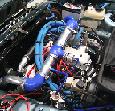
My renix has empty connector C, I think, at least there is no wires going to it and also I think that renix makes bad sparks/timing compared to when I had Bosch -139 modula as slave of MS, torque was a lot stronger when low throttle after bit of adjustments to ignition tablevolvodspec wrote:just went through the technical files, and you're right
the 9,2:1 B200E and B200K will cope with Ron91
the 10:1 B200E and B200K need Ron98
does yours have a plugged in C-connector at the renix, if it does; are C-6 and C-7 grounded?

I know that R5 had renix that had knock sensor which plugged into to C-connector, but it was probably bit different from inside too.
edit:
My Renix is 414A unit (not sure if correct for the car), it is that messy because I had bad battery which made lot of that mess from some odd reason, had to renew main power cable too because of that and it made lot of rust and all that.

Volvo 360GL -88 -under restoration-
Volvo 343DL vario -81 -running-
Volvo 240 Diesel -83 -undecided-
Citroen ZX Dturbo -97 -daily-
Volvo 343DL vario -81 -running-
Volvo 240 Diesel -83 -undecided-
Citroen ZX Dturbo -97 -daily-
-
volvodspec
- Posts: 1921
- Joined: 06 Dec 2008 09:35 pm
- Location: Netherlands.
- Contact:
Re: E10 fuel for 360 (or 340)?
that is the correct curve for the highcompression B200K..
if C-connector is empty you're lucky; if you want to experiment with running it on 95 you can start with grounding C-6 and if that doesn't give enough result also earth C-7
these will retard the ignition by 3 (C-6) or 6 (C6+C7) degrees to prevent detonation of the lower octane fuel worth a shot imo compared to the more agressive E10 fuel, i don't think the plastic foamy floater will like it
if C-connector is empty you're lucky; if you want to experiment with running it on 95 you can start with grounding C-6 and if that doesn't give enough result also earth C-7
these will retard the ignition by 3 (C-6) or 6 (C6+C7) degrees to prevent detonation of the lower octane fuel
worth a shot imo compared to the more agressive E10 fuel, i don't think the plastic foamy floater will like itRe: E10 fuel for 360 (or 340)?
Yeah, float might be bit of an issue, but it really should not be too hard to mod, if just can find huge stack of floats somewhere I could find out which fits into float chamber and just swap that floating part, then of course setting fuel level would require some experimenting, maybe octane booster is then easier solution?
Hmm, I do wonder how knock sensor operates? If that would simply be a switch that grounds wire it would not require more than sensor to block (I think there is place already) then wire it to connector-c and it would be much more efficient than constant retarding of ignition.
I think that Volvo did play bit safe when making ignition mapping, especially when little acceleration is applied motor can take much more advance than what Renix gives.
Had no chance to make this final, but with that no pinking:

If they stop selling 98 octane, then might go back for MS, but it is going to make impossible to get historic car registration.
Hmm, I do wonder how knock sensor operates? If that would simply be a switch that grounds wire it would not require more than sensor to block (I think there is place already) then wire it to connector-c and it would be much more efficient than constant retarding of ignition.
I think that Volvo did play bit safe when making ignition mapping, especially when little acceleration is applied motor can take much more advance than what Renix gives.
Had no chance to make this final, but with that no pinking:
If they stop selling 98 octane, then might go back for MS, but it is going to make impossible to get historic car registration.
Volvo 360GL -88 -under restoration-
Volvo 343DL vario -81 -running-
Volvo 240 Diesel -83 -undecided-
Citroen ZX Dturbo -97 -daily-
Volvo 343DL vario -81 -running-
Volvo 240 Diesel -83 -undecided-
Citroen ZX Dturbo -97 -daily-
Re: E10 fuel for 360 (or 340)?
I have been thinking here, even as of now fuel has 5% of ethanol in it, ethanol is bad for fuel lines, gaskets, seals and floats that are not made from materials that will tolerate that stuff.
So I wonder how much of running problems today are really because of ethanol in fuel? Certainly in 360 there will be some issues mainly because of float and fuel pump, also those old fuel lines are useless with that stuff and I have started to suspect that even this 5% mixture is bad for those plastic fuel lines that run inside the boxed section, even I have renewed all the other fuel lines, I still have one fuel return line in use, so I have to replace that too, also my fuel pump is perhaps not up to task, so have to get new one.
But how about float then? There should be some material which will not melt because of ethanol and which from I can cast new floats, but what might be this mysterious material?
Reason why new floats seem to get soaked so soon could be that fuel already contain that 5% of ethanol, I think it is same in UK too, here they have done that in secrecy and surprise surprise there has been increase in car fires, it is like some mad plan to remove old cars from roads. After 2011 there might not be non ethanol fuels at all, I don't know if everyone has realized what this means, cars consuming more fuel and old rubbers failing at old cars.
What I think is that we should prepare to future, at 2013 current E5 fuels are no longer required to sell, so after that it is quite fast move towards E10 and more ethanol only, how we are going to drive then?
So I wonder how much of running problems today are really because of ethanol in fuel? Certainly in 360 there will be some issues mainly because of float and fuel pump, also those old fuel lines are useless with that stuff and I have started to suspect that even this 5% mixture is bad for those plastic fuel lines that run inside the boxed section, even I have renewed all the other fuel lines, I still have one fuel return line in use, so I have to replace that too, also my fuel pump is perhaps not up to task, so have to get new one.
But how about float then? There should be some material which will not melt because of ethanol and which from I can cast new floats, but what might be this mysterious material?
Reason why new floats seem to get soaked so soon could be that fuel already contain that 5% of ethanol, I think it is same in UK too, here they have done that in secrecy and surprise surprise there has been increase in car fires, it is like some mad plan to remove old cars from roads. After 2011 there might not be non ethanol fuels at all, I don't know if everyone has realized what this means, cars consuming more fuel and old rubbers failing at old cars.
What I think is that we should prepare to future, at 2013 current E5 fuels are no longer required to sell, so after that it is quite fast move towards E10 and more ethanol only, how we are going to drive then?
Volvo 360GL -88 -under restoration-
Volvo 343DL vario -81 -running-
Volvo 240 Diesel -83 -undecided-
Citroen ZX Dturbo -97 -daily-
Volvo 343DL vario -81 -running-
Volvo 240 Diesel -83 -undecided-
Citroen ZX Dturbo -97 -daily-
-
macplaxton
- Posts: 3283
- Joined: 09 Feb 2008 02:29 am
Re: E10 fuel for 360 (or 340)?
Nylon 6 which I've seen in fuel lines has good resistance to alcohols and aromatic hydrocarbonsjtbo wrote:and I have started to suspect that even this 5% mixture is bad for those plastic fuel lines that run inside the boxed section
Same again, I wouldn't worry about a synthetic float, I'd worry about the metal! Volkswagen Beetles that run on pure ethanol have nickel plated carbs (or something like it).jtbo wrote:But how about float then? There should be some material which will not melt because of ethanol and which from I can cast new floats, but what might be this mysterious material?
Any proper chemists here? I've only got O Grade
72 DAF 44 Estate 78 Volvo 343DL Black Beauty

82 Volvo 343DL CVT
 88 Volvo 340DL Diesel
82 Volvo 343DL CVT
88 Volvo 340DL DieselRe: E10 fuel for 360 (or 340)?
Haven't heard about metals melting because of alcohol, but it sure will move any dirt and it sure is quite dry stuff, will research bit into this.
I re-found this http://www.journeytoforever.org/biofuel ... drane.html it is quite good piece of info there, 9:1 air ethanol ratio and float being higher in ethanol than in petrol, so our soaked float might be then happier with that stuff than with current petrol.
It's bit annoying how systematically everywhere they just talk about 2000 and newer cars, but not about how to make older cars compatible.
Is there some parts in fuel pump that needs lubrication from fuel? Diagraph itself might be something not very compatible with the stuff, imo. Who knows what material those are. When preparing, I think it is best to prepare for E85 already, ignition would need some way to advance few degrees and jets would need swapping, nothing too major, imo.
Maybe best would be to get distributor and Bosch ignition module, so one would have possibility to adjust damn thing.
Found this:
http://www.nmma.org/lib/docs/nmma/gr/en ... _Paper.doc
http://cgschoen.blogspot.com/2007/04/et ... l-and.html That if anything proves that they are only after to sell new cars, certainly they must know of what that stuff does to our classic cars?
Our current fuels have 5% of ethanol already, all fuel has it so process is already going even it is slower than with E85, but how to protect carb from this corrosion and how to prevent premature engine failure? I have not answers to that. Also cylinder head is alloy and even if fuel injection has better tolerance to stuff, there will be wear to head because of this stuff.
I re-found this http://www.journeytoforever.org/biofuel ... drane.html it is quite good piece of info there, 9:1 air ethanol ratio and float being higher in ethanol than in petrol, so our soaked float might be then happier with that stuff than with current petrol.
It's bit annoying how systematically everywhere they just talk about 2000 and newer cars, but not about how to make older cars compatible.
Is there some parts in fuel pump that needs lubrication from fuel? Diagraph itself might be something not very compatible with the stuff, imo. Who knows what material those are. When preparing, I think it is best to prepare for E85 already, ignition would need some way to advance few degrees and jets would need swapping, nothing too major, imo.
Maybe best would be to get distributor and Bosch ignition module, so one would have possibility to adjust damn thing.
Found this:
http://www.nmma.org/lib/docs/nmma/gr/en ... _Paper.doc
Then I did searched more and found something from Brazil:In the case of aluminum tanks, aluminum is a highly conductive metal that relies on an oxide layer for its corrosion protection properties. Low levels of ethanol, such as E10 (10%), are usually not a problem in aluminum tanks because the oxide layer provides a good measure of protection. The problem occurs when the ethanol content is increased.
There are two mechanisms that occur with ethanol. Both mechanisms are a result of the hydroscopic property of ethanol, meaning it absorbs water. The more ethanol in the fuel, the more water there will be in the fuel tank. Water not only causes the tank to corrode, it also causes the corrosion particles to clog fuel filters, fuel systems, and damage engine components. The corrosion rate can be accelerated under a number of conditions if other contaminating metals are present such as copper which may be picked up from brass fittings or as a low level contaminant in the aluminum alloy. Chloride, which is a chemical found in salt water, will also accelerate corrosion. In the long term, corrosion can perforate the aluminum to produce leaks that would cause fuel to spill into the bilge and end up in the environment. In the worse case it could cause a fire and/or explosion hazard. Boat fuel tanks are often located under the deck next to the engine where the operator might not be aware of a leak until it was too late. .
The second mechanism that can occurs with the increased use of ethanol based fuel in aluminum tanks is galvanic corrosion. Gasoline fuel is not conductive, but the presence of ethanol or ethanol and water will conduct electricity. The galvanic process that occurs to aluminum trim tabs, stern drives, shaft couplings, etc. will occur within the aluminum fuel tank. Boat builders are able to protect exterior aluminum boat equipment with sacrificial anodes known as zincs. Sacrificial anodes are not a feasible option for the interior of a fuel tank.
http://cgschoen.blogspot.com/2007/04/et ... l-and.html
So EU, while buying clean self conscience, is destroying our motors by melting our carbs to our engines which will worn our engines out fasterThe corrosion problems in the ethanol car were observed in many components. However, the most critical was that of the carburetor. At that time the carburetors in Brazil were essentially made of Zamak alloy (zinc-aluminum-copper alloy), and only in some few cars aluminum alloy carburetors were used. Already during the development stage it was found that Zamak and aluminum alloy were not corrosion resistant to ethanol and that some protective coating was necessary. Thus, the first attempt was to apply to Zamak carburetors a double dip chromate coating, but it was soon realized that the improvement in corrosion resistance it provided was only temporary.
In the first ethanol cars the corrosion of the carburetor, which is a vital component of a vehicle, was responsible for a considerable amount of corrosion products, which were dragged by the fuel, obstructing the calibrated orifices and interfering with the normal flux of the fuel, causing frequent problems of engine adjustment and increasing the ethanol consumption.
It can be stated that the ethanol car became viable only after the corrosion problems of the carburetor were solved. This was achieved when the Zamak carburetors became plated with electroless nickel. The idea of using this type of coating come out in a meeting at IPT that I and my colleagues from the Corrosion and Electroplating Laboratory had with the people of Ford R&D Laboratory. The Ford car manufacturer was the first to produce ethanol cars with this type of carburetor.
Coatings of other components of the car had also to be substituted for new coatings resistant to ethanol fuel. Thus, in the fuel tank the lead/tin coating (terne plate) was substituted by a tin coating with an intermediary coating of copper. All zinc coated components, chromatized or not, were substituted by cadmium chromatized components.
The ethanol car, in terms of materials used in its manufacture, became significantly different from the gasoline car. More than 300 components in the ethanol car are different from those used in gasoline car.
That if anything proves that they are only after to sell new cars, certainly they must know of what that stuff does to our classic cars?Our current fuels have 5% of ethanol already, all fuel has it so process is already going even it is slower than with E85, but how to protect carb from this corrosion and how to prevent premature engine failure? I have not answers to that. Also cylinder head is alloy and even if fuel injection has better tolerance to stuff, there will be wear to head because of this stuff.
Volvo 360GL -88 -under restoration-
Volvo 343DL vario -81 -running-
Volvo 240 Diesel -83 -undecided-
Citroen ZX Dturbo -97 -daily-
Volvo 343DL vario -81 -running-
Volvo 240 Diesel -83 -undecided-
Citroen ZX Dturbo -97 -daily-
-
macplaxton
- Posts: 3283
- Joined: 09 Feb 2008 02:29 am
Re: E10 fuel for 360 (or 340)?
Now you havejtbo wrote:Haven't heard about metals melting because of alcohol
 Zamak (I've known it called Mazak - old classic door handles were quite often chrome plated Mazak - I call it a type of "monkey metal") - (Wikipedia entry here)
Look up the Federation of British Historic Vehicle Clubs page (FBHVC) on fuels. Plenty has been mentioned in their newsletters about it. What does the SA-HK do? (They are affiliated to FIVA) Also, I've come across issues in North America with small engines such as chainsaws and the like.jtbo wrote:It's bit annoying how systematically everywhere they just talk about 2000 and newer cars, but not about how to make older cars compatible.
Not really, other than what is lubricated by the hole in the engine block.jtbo wrote:Is there some parts in fuel pump that needs lubrication from fuel?
Possibly. I've seen plenty of cars originally built for leaded petrol have their diaphragm materials been melted by unleaded. Same with some fuel hoses. Depends on materials.jtbo wrote:Diaphragm itself might be something not very compatible with the stuff, imo.
Go the whole hog and get a MegaJolt! (I also keep hearing rumours that 123ignitions will do a programmable unit with USB socket, but I've never seen one)jtbo wrote:Maybe best would be to get distributor and Bosch ignition module, so one would have possibility to adjust damn thing.
Tanks, I've heard problems on motorcycles. Rusty tank lined with PetSeal. Old PetSeal would react with ethanol. New PetSeal formulation doesn't. POR 15 seems okay.
72 DAF 44 Estate 78 Volvo 343DL Black Beauty
82 Volvo 343DL CVT 88 Volvo 340DL Diesel
82 Volvo 343DL CVT
88 Volvo 340DL DieselRe: E10 fuel for 360 (or 340)?
I have Megasquirt with Extra code and bosch module for it, it is complete ignition control system and has so much more, like fuel injection computer in it too, just should bother to install it and that would be good ignition setup, but I like things very simple, however maybe not possible soon because of this silly fuel thing.
What choices we realistically have to keep our cars running when ethanol content is rising all the time, after 2013 it might be quite difficult to get fuel that would be ok with our cars and that is only 3 years of time now.
What choices we realistically have to keep our cars running when ethanol content is rising all the time, after 2013 it might be quite difficult to get fuel that would be ok with our cars and that is only 3 years of time now.
Volvo 360GL -88 -under restoration-
Volvo 343DL vario -81 -running-
Volvo 240 Diesel -83 -undecided-
Citroen ZX Dturbo -97 -daily-
Volvo 343DL vario -81 -running-
Volvo 240 Diesel -83 -undecided-
Citroen ZX Dturbo -97 -daily-
Re: E10 fuel for 360 (or 340)?
Hmm... 95 RON + lead additive? that should stop the knocking. maybe, try it